Preamp for voice over: you probably don't need one. The preamps built into modern audio interfaces are good enough for professional work. I started with a $100 microphone and an interface that cost about the same, and booked work from major brands before I ever touched an external preamp. The obsession with signal chain gear is one of the most persistent distractions in the voice over industry.
That's the short answer. But there's more to it, and understanding why helps you make better decisions about where to actually spend your money.
What a preamp actually does
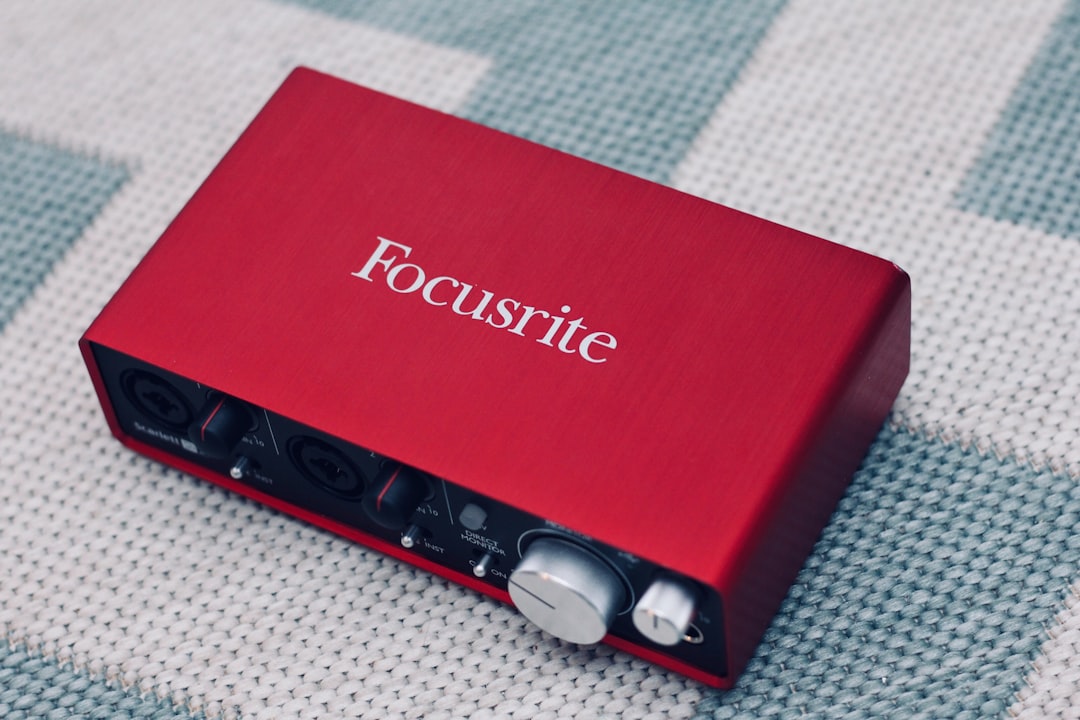
A preamp takes the weak signal from your microphone and amplifies it to a usable level. That's it. Every audio interface with an XLR input already has one built in. The Focusrite Scarlett series, the Universal Audio Volt, the Audient iD4 — they all have preamps inside. When you plug in your mic and turn up the gain, that's the preamp doing its job.
External preamps exist because some of them add specific sonic characteristics. A Neve preamp sounds different from an API preamp. Some add subtle harmonic distortion that engineers describe as "warmth" or "color." Others are transparent and clean. The differences are real, but they're subtle.
And here's the thing: subtle differences in your signal chain disappear entirely when your audio gets compressed for streaming, played through phone speakers, or dropped under music in a commercial.
The signal chain myth
I've lost count of how many voice over artists ask me about preamps, compressors, and EQ chains before they've properly treated their recording space. According to a 2022 survey by the Audio Engineering Society, room acoustics account for roughly 60-70% of perceived audio quality in voice recordings. Your preamp accounts for maybe 5% of what the client hears.
But preamps are sexy. Room treatment is ugly foam panels. I get it.
The voice over signal chain for Spanish or any other language follows the same logic: microphone into preamp (whether internal or external) into your DAW. What matters most is what happens before the signal even reaches the microphone — the room, the distance, the angle, your interpretation. Why acoustic treatment is more important than your microphone is a hill I'll die on.
When an external preamp makes sense
There are legitimate reasons to buy one. If your interface has noisy preamps with audible hiss at moderate gain levels, an external preamp solves that problem. Some older or cheaper interfaces have this issue. Modern ones from reputable brands almost never do.
If you're doing long-form audiobook narration and want a specific tonal character baked into your recordings, a colored preamp can be a creative choice. If you're recording multiple sources and need more inputs with individual preamp control, that's another valid reason.
But if you're asking whether you need a preamp to get voice over work? The answer is no. I've recorded campaigns for Ford, Google, and dozens of Fortune 500 brands with interface preamps. Nobody ever asked me what preamp I used. They cared about the interpretation, the delivery, the timing. (Which is ironic, because I've spent more time answering gear questions from aspiring voice artists than I ever have from actual paying clients.)
The real voice over signal chain that matters
Here's what actually affects your Spanish voice over recordings, in order of importance:
Your interpretation. This is first because work buys gear — gear doesn't buy work. A mediocre read through a $3,000 signal chain sounds worse than a great read through a $300 setup.
Your room. Reflections, reverb, and background noise destroy recordings faster than any preamp can save them. Have you ever listened to a voice over demo that sounded like it was recorded in a bathroom? That's a room problem, and no Avalon VT-737 fixes it.
Your microphone technique. Distance, angle, and plosive management matter enormously. A condenser mic two inches from your mouth with no pop filter creates problems that live forever in the recording.
Your microphone itself. This is where differences become audible. A $100 mic sounds different from a $500 mic, and both sound different from a $1,500 mic.
Your interface and preamp. Finally. And honestly, the differences here are small unless you're comparing budget interfaces from ten years ago to modern equipment.
The numbers don't lie
A 2023 blind listening test conducted by Sound on Sound magazine found that audio engineers could distinguish between a $200 interface preamp and a $2,000 external preamp only 58% of the time when listening to processed, mixed vocals. For unprocessed voice recordings played in isolation, that number rose to about 70%. Still not overwhelming.
The practical takeaway: your client cannot hear the difference between your Focusrite Scarlett preamp and an external unit. They can absolutely hear the difference between a well-treated room and an untreated one. They can hear hesitation in your delivery. They can hear when you don't understand the Spanish script you're reading.
What I actually use
I own an external preamp. I bought it after fifteen years of professional work, when I had more money than sense and wanted to experiment. Do I think it improved my recordings? Maybe by 2%. Do I think it got me more work? Zero percent.
What got me work was being available, delivering neutral Spanish without regional markers, understanding what clients actually need, and showing up reliably for twenty years. My home studio setup matters, but the specific preamp model is close to irrelevant.
The gear acquisition trap
Voice over forums are full of people discussing signal chains who have never booked a paying job. It's easier to research preamps than to cold-email agencies. It's more fun to watch comparison videos on YouTube than to practice interpretation. Buying gear feels like progress even when it isn't.
If you don't have a solid demo, a professional website, and a way to be found by clients, a preamp purchase is procrastination. And if you do have all those things and you're booking work regularly, you already know you don't need advice on preamps.
The exception that proves the rule
Some voice artists work in genres where tonal character matters more — audiobooks with specific aesthetic requirements, certain podcast styles, high-end commercial campaigns that will be minimally compressed. In those cases, an external preamp can be a legitimate tool.
But for standard commercial voice over, e-learning, corporate narration, and the vast majority of Spanish voice over work? The preamp built into your interface is fine. It was fine ten years ago with equipment that cost half as much, and it's better than fine now.
Spend your money on room treatment. Spend it on coaching. Spend it on a better microphone if yours is genuinely limiting you. The preamp question is almost always the wrong question to be asking.
Need a Spanish voice over for your next project? Get in touch and I'll get back to you within the hour.