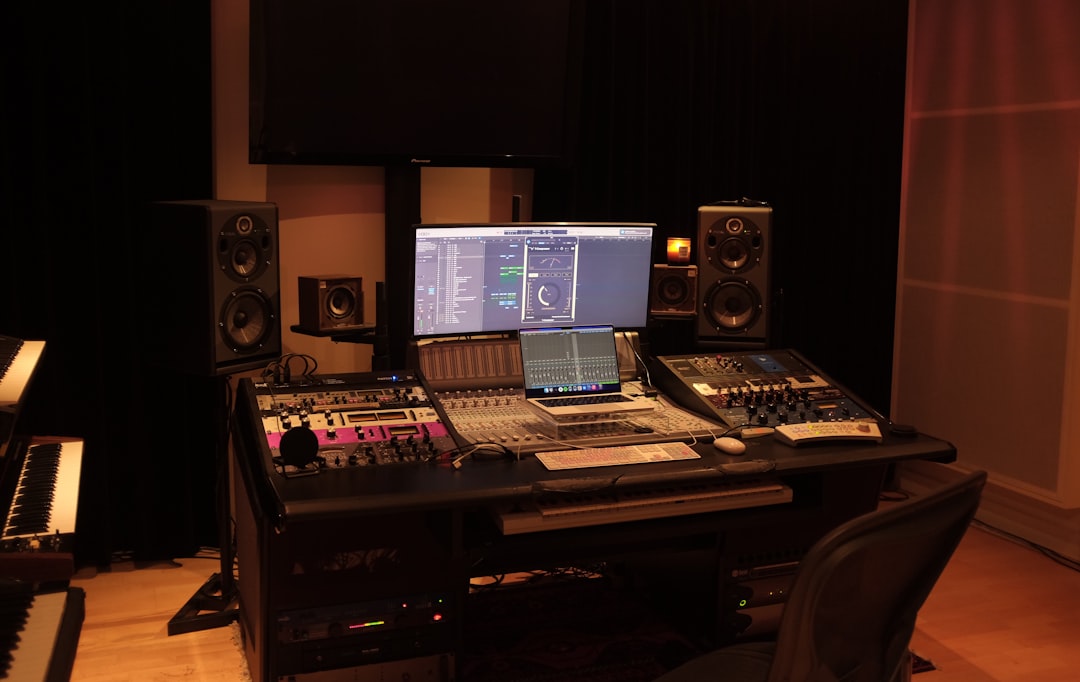
Acoustic treatment is more important than your microphone for professional voice over. Full stop. I've heard recordings from $3,000 Neumann microphones that sounded like someone was narrating from inside a bathroom, and I've heard $100 Audio-Technicas that sounded broadcast-ready. The difference was always the room.
This is the gear conversation nobody wants to have because it requires actual work instead of just buying something online.
Your Microphone Captures What's Already There
Here's what a microphone actually does: it captures sound. All of it. The good stuff and everything else bouncing around your untreated room — the reflections off your desk, the slap echo from that bare wall three feet behind you, the low rumble from the HVAC system you've learned to ignore but every listener hears immediately.
A better microphone doesn't fix these problems. It captures them with more detail.
This is counterintuitive for people coming from other fields. In photography, a better lens genuinely produces sharper images. In audio, a better microphone in a bad acoustic environment produces a more detailed recording of a bad acoustic environment. According to a study published in the Journal of the Audio Engineering Society, room acoustics account for up to 70% of the perceived quality of a recording — far more than any single piece of equipment.
The $100 Mic in a Treated Room
I started with a hundred-dollar microphone. An Audio-Technica AT2020, which I still have somewhere in a drawer. That mic recorded spots for major brands because I was obsessive about the room it sat in.
The room I used wasn't fancy — a converted closet with moving blankets on the walls, a piece of carpet on the floor, and a few panels I made myself from rigid fiberglass and fabric. Total investment in acoustic treatment: maybe $200. And that $300 setup (mic plus room treatment) produced cleaner recordings than I later heard from voice over artists who had bought Neumann U87s and set them up in their spare bedroom surrounded by reflective surfaces.
Have you ever listened to a voice over where something sounded slightly off but you couldn't identify what? Probably room reflections. They create a subtle hollowness that listeners perceive as cheapness or amateurism, even when they can't articulate why.
What Acoustic Treatment Actually Does
Acoustic treatment serves two purposes: absorption and diffusion. Absorption reduces reflections by converting sound energy into heat (usually through porous materials like foam or fiberglass). Diffusion scatters reflections so they don't return to the microphone as distinct echoes.
For voice over, absorption is the priority. You want a dry, controlled sound that gives the engineer downstream maximum flexibility to add whatever reverb or ambience the project requires. A voice over recorded in an untreated room has that room baked into every syllable permanently.
The physics here are unforgiving. Sound travels at roughly 343 meters per second at room temperature. In a typical spare bedroom, reflections from the nearest wall return to the microphone in under 10 milliseconds — fast enough that your brain doesn't hear them as a separate echo but slow enough that they color the direct sound, creating that characteristic "roomy" quality that screams amateur.
The Minimum Viable Treatment
You don't need to build an anechoic chamber. You need to address the first reflection points and reduce the overall reverb time (RT60) of your recording space to something acceptable — ideally under 0.3 seconds for voice over work.
First reflection points are the surfaces where sound bouncing directly from your mouth hits and reflects back to the microphone. For a typical desk setup: the wall behind your monitor, the ceiling above you, the desk surface itself, and any walls to your left and right within arm's reach.
The cheapest solution: hang thick moving blankets on these surfaces. Not elegant, but effective. (I used them for my first three years of professional work, and nobody ever asked why my studio looked like a furniture storage unit.)
The better solution: 2-4 inch thick rigid fiberglass panels covered in acoustically transparent fabric, mounted at first reflection points. You can buy these pre-made from companies like GIK Acoustics or Acoustimac, or build them yourself for roughly 40% of the retail cost if you have basic DIY skills.
The Upgrade Path That Actually Works
Here's the order I recommend for upgrading a home studio, based on 20+ years of watching voice over artists get this wrong:
Acoustic treatment comes first. Get your room under control before you spend another dollar on equipment. A USB microphone in a treated room beats a professional condenser in an untreated one every single time.
Interface comes second. A decent audio interface with clean preamps (Focusrite Scarlett, Universal Audio Volt, Audient iD4) ensures the signal path from your microphone to your computer doesn't introduce noise.
Microphone comes third. And honestly, the difference between a $300 microphone and a $3,000 microphone in a properly treated room is subtle enough that most clients will never notice. I upgraded to a Sennheiser MKH 416 eventually, but I could have stayed with entry-level gear for years longer and nobody would have complained.
Why Voice Over Artists Get This Backwards
Microphones are exciting. Acoustic panels are boring. That's the whole explanation.
Buying a new microphone feels like an upgrade. Building or buying acoustic treatment feels like homework. Plus, microphones photograph well for your social media posts, while acoustic panels make your space look like a padded cell.
But work buys gear — gear doesn't buy work. The artists I know who built sustainable careers invested in their rooms early and kept modest microphone setups for years. The ones who bought flagship microphones while recording in spare bedrooms with hardwood floors — many of them aren't in the industry anymore.
What Clients Actually Hear
Here's what happens when a client receives your voice over file: they listen to it on laptop speakers, or through AirPods, or maybe through a conference room system with questionable calibration. They're not analyzing your microphone's frequency response curve. They're asking themselves whether it sounds professional.
And "professional" means clean, dry, free of obvious room reflections, free of background noise, free of that hollow echo that makes corporate training sound like it was recorded in a warehouse. These are all room problems, addressed with acoustic treatment.
A client has never called me to say they detected that I wasn't using a U87. Clients have absolutely called to ask why a voice over artist they hired through a casting platform sounded like they were recording in their garage. Because they were recording in their garage.
The Treatment Mistake Nobody Mentions
Foam everywhere isn't the answer. Those egg-crate foam panels you see covering entire walls in YouTube home studio tours absorb high frequencies effectively but do almost nothing for low frequencies. The result is a room that sounds dead in the upper registers but boomy and muddy in the bass — worse than no treatment at all in some ways.
Bass traps in corners matter more than foam on walls. Low frequencies build up in room corners due to basic wave physics. Treating those corners with thick absorbers (minimum 4 inches, ideally 6 or more) addresses the mud that makes voice over sound unprofessional.
The ideal combination: bass traps in all corners, 2-4 inch broadband absorbers at first reflection points, and enough remaining reflective surface that the room doesn't sound completely lifeless. Some natural ambience is fine — you want dry, not dead.
Recording in Spanish Makes This More Critical
Spanish pronunciation involves sounds that expose room problems ruthlessly. The rolled R, the open vowels, the rhythmic patterns that differ from English — all of these reveal acoustic issues that might go unnoticed in English voice over.
When I record neutral Spanish for corporate clients, clarity is everything. Room reflections muddy consonants. Flutter echo from parallel walls makes sibilants sound harsh. Bass buildup from untreated corners makes the voice sound boomy and authoritative in all the wrong ways.
The solution isn't a better microphone. The solution is getting those problems out of the signal chain before they reach any microphone at all.
The Math That Should Convince You
A professional-grade microphone costs $1,000-3,000. Properly treating a small room costs $500-1,500, depending on whether you DIY or buy pre-made panels.
But here's the difference: acoustic treatment solves the problem permanently for every microphone you ever use in that space. A better microphone in an untreated room just gives you more detailed recordings of your acoustic problems, which you'll still need to solve eventually.
I've watched voice over artists spend $4,000 on a microphone and preamp chain, record in their untreated spare bedroom, and wonder why they're not booking work. Meanwhile, someone with $800 in total equipment investment but a properly treated closet is recording national spots.
The room is the foundation. Everything else is decoration.
Need a Spanish voice over for your next project? Get in touch and I'll get back to you within the hour.