Your voice over chain weakest link signal problem will define everything about your final audio quality. You can have a $3,000 Neumann microphone, a $2,500 preamp, and an acoustically treated studio that cost more than some cars — and still end up with a recording that sounds like it was made in a bathroom. The signal chain in voice over follows one brutal rule: the worst component in the path determines the ceiling for the entire production. Everything else is just expensive decoration.
I've seen this play out dozens of times over two decades. Someone invests heavily in one piece of gear because they read a forum post about it, ignores the rest of the chain, and wonders why their recordings still sound amateur. The answer is always somewhere in the links they didn't think about.
The chain starts before the microphone
Most people think the signal chain begins when sound hits the diaphragm. Wrong. It begins in the room. According to research published by the Audio Engineering Society, room acoustics contribute more to perceived audio quality than microphone selection in untreated spaces — sometimes by a factor of 3:1 in terms of listener preference. That means your $100 mic in a properly treated booth will outperform a $2,000 mic in your spare bedroom with hardwood floors and bare walls.
The acoustic environment is link zero. And when link zero is compromised, nothing downstream can fix it. You can't EQ out flutter echo. You can't compress away the sound of your neighbor's lawnmower bleeding through thin walls. You can't gate out the constant hum of an HVAC system that cycles on and off during takes.
Microphone to preamp: where most chains break
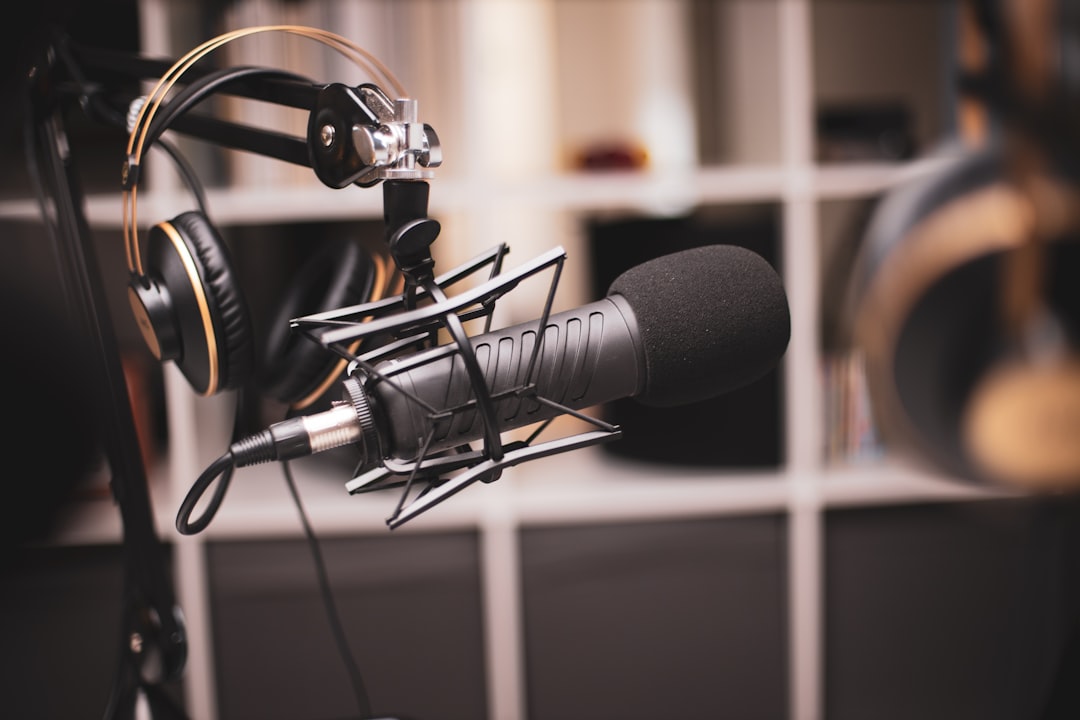
Here's where the voice over equipment chain Spanish quality conversation usually derails. Someone buys a Shure SM7B because they heard Joe Rogan uses one (which, by the way, is a perfectly fine microphone for podcast-style work but requires significant gain). Then they plug it into the built-in preamp of a $150 audio interface and wonder why it sounds thin and noisy.
The SM7B needs about 60dB of clean gain. Most budget interface preamps start introducing noise around 40-45dB. That's the chain breaking in real time.
But the problem works in reverse too. I've met voice over artists running a sensitive condenser through a $1,500 tube preamp into an interface with a mediocre analog-to-digital converter. All that warmth and detail captured by the expensive front end gets bottlenecked by a conversion stage that can't resolve it. A 2022 analysis by Sound on Sound found that ADC quality variance between budget and professional interfaces can represent differences of 10-15dB in dynamic range — which translates directly to audible noise floor issues in quiet passages.
The cable nobody thinks about
Have you ever debugged a recording where everything measured fine but the audio had an intermittent crackle that appeared and vanished at random? Nine times out of ten, it's the XLR cable. People spend thousands on microphones and preamps and then connect them with a $12 cable from Amazon that develops micro-fractures in the solder joints within six months.
This isn't audiophile snake oil about "cable tone." This is basic electrical reliability. A failing cable connection introduces noise, can create ground loops, and — worst case — causes complete signal dropout mid-take. I keep backup cables within arm's reach during every session because I've learned the hard way that the $8 difference between a cheap cable and a decent one can cost hours of re-recording.
Digital isn't immune
People assume that once the signal is digital, the chain problems end. The conversion happened, the bits are the bits, and now everything is safe in the computer. This ignores several real failure points that affect the signal chain voice over Spanish quality in your final delivery.
Your DAW's internal processing matters. Buffer settings that work fine for mixing can introduce latency issues during recording that throw off timing. Plugin processing order in your monitoring chain can mask problems you won't hear until mixdown. And the export stage — often overlooked entirely — can quietly degrade audio through bad sample rate conversion or lossy encoding that nobody requested.
I once received a project where the client complained my delivered audio sounded different from the session. Same files, same everything. Turned out their in-house editor was dragging the 48kHz files into a 44.1kHz timeline without conversion, letting the software "handle it." The software handled it badly. That's a chain link most people don't even know exists.
The monitoring loop closes the chain
Your signal chain doesn't end at the recording. It extends through whatever you're using to evaluate the recording. If you're monitoring through laptop speakers or consumer earbuds during a session, you're not hearing what's actually being captured. You're hearing a heavily colored, limited-bandwidth approximation that hides problems you'll discover later when the client plays it back on a proper system.
This is why professional studios invest in accurate monitors and treated listening environments (a standard near-field setup in an acoustically controlled room costs roughly $2,000-5,000 for the monitors alone, not including treatment). The monitoring chain is diagnostic equipment. If your diagnostic equipment lies to you, every decision you make based on it is potentially wrong.
Where interpretation fits in the chain
Here's the part that separates voice over from pure audio engineering. You can build a technically perfect signal chain — pristine room, matched impedances, calibrated monitoring — and still deliver a recording that sounds lifeless. Because the signal chain for voice over includes the human performance as a link.
A nervous read introduces tension that changes vocal cord behavior. A cold read from an unfamiliar script produces hesitation patterns. A poorly written script (especially those translated word-for-word from English) creates awkward phrasing that no amount of technical excellence can save. The interpretation is upstream of the microphone but it's absolutely part of what arrives at the final listener's ears.
The math of chain degradation
If each link in your chain preserves 95% of signal quality — which would be quite good — and you have eight links, you're looking at roughly 66% quality preservation by the end. That's the compounding nature of chain degradation.
But chain links rarely degrade linearly. Usually one link is significantly worse than the others, and that link becomes the bottleneck. If seven links preserve 98% each but one link only preserves 70%, your final quality is capped at that 70% regardless of how perfect everything else is. Spending money to improve links that aren't the bottleneck produces zero audible improvement.
This is why the obsession with upgrading microphones often misses the point. The microphone is one link. If your room is the problem, a better microphone just captures the bad room more accurately.
Finding your actual weakest link
The only way to identify your chain's bottleneck is systematic isolation. Record the same short passage, then swap one component at a time while keeping everything else constant. Listen critically after each swap. When a change produces dramatic improvement, you've found a weak link. When a change produces no audible difference, that component wasn't your bottleneck.
This process is tedious. Most people don't do it. They buy gear based on recommendations and hope, which is why studios at every budget level end up with mismatched chains that underperform their price point.
What actually matters for Spanish voice over delivery
For commercial Spanish voice over work, the chain needs to deliver clean audio at broadcast specification — typically -24 LUFS integrated loudness, peaks under -3dB true peak, noise floor below -60dB. Meeting these specs requires every link in the chain to be at least competent. One bad link makes compliance impossible without destructive processing that degrades the final product.
The client doesn't care about your gear list. They care about receiving audio that sounds professional, integrates cleanly with their video or media, and doesn't require their engineer to spend an hour fixing problems that should have been solved at the source.
Need a Spanish voice over for your next project? Get in touch and I'll get back to you within the hour.