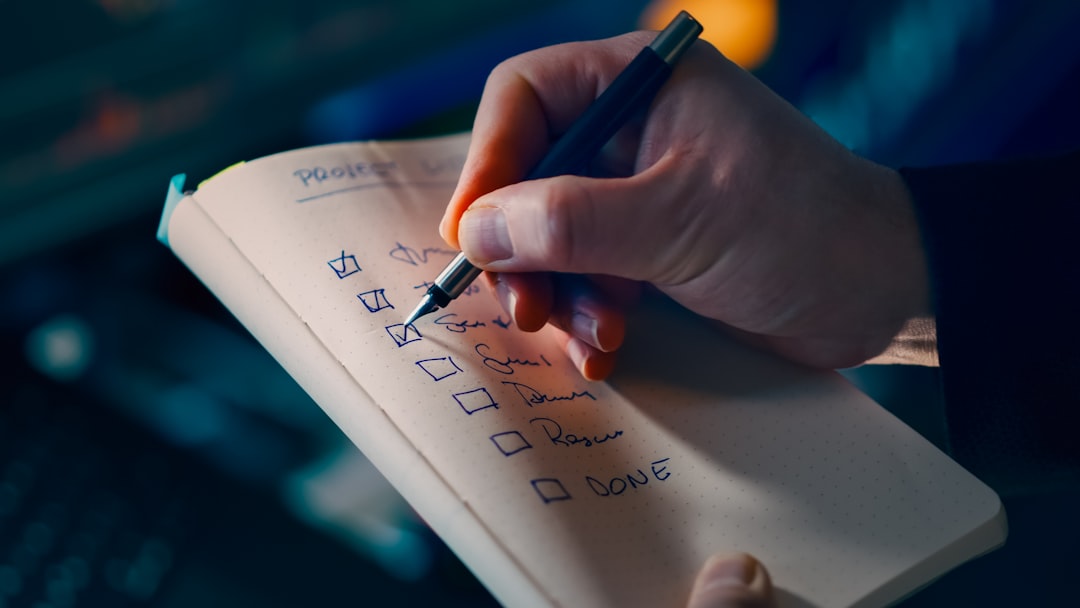
A pre-session checklist for voice over before you record separates sessions that take 30 minutes from sessions that take three hours. I've been doing this for over 20 years, and the pattern is always the same: the client who shows up prepared finishes fast and happy, while the client who shows up with half the information spends most of the session figuring out what they actually need.
This is the checklist. Print it. Bookmark it. Send it to your team the day before.
The final script, in editable format
PDF scripts are a plague. I've written about the problems with PDF scripts at length, but here's the short version: if we need to make a change during the session—and we almost always do—a PDF forces someone to retype it, which creates errors and wastes time.
Send a Word document or a Google Doc with edit access. Plain text works too.
And if the script was translated from English, it needs to be reviewed before the session. Spanish runs about 30% longer than English, which means your 30-second English script becomes a 39-second Spanish script. That's a problem if your video is locked to 30 seconds, and it's a problem that needs solving before we start recording. The 30% rule is physics, not opinion.
Timing requirements or the video itself
If the voice over has to match picture, I need to see the picture. Not a description of the picture. The actual video file.
A Nielsen study from 2023 found that audio-visual sync issues are among the top three reasons viewers stop watching branded content within the first five seconds. Five seconds. The human brain detects mismatch instantly, even when the viewer can't articulate what feels wrong.
If there's no video yet—common in early-stage projects—tell me the exact duration. "Around 60 seconds" is not useful. Is it 58 seconds? 63? The difference matters when every word counts.
A reference track or style example
"I want it warm but professional" means something different to every person who says it. I've heard that direction a thousand times, and I could deliver twenty different reads that all technically fit that description.
What works better: send me something that sounds like what you want. Another ad. A podcast. A previous spot your brand did. Even a competitor's work (I won't tell anyone). The reference doesn't have to be in Spanish—if you send me an English ad with the tone you're after, I'll understand immediately.
Have you ever received a finished voice over and thought "that's not what I meant" even though you couldn't explain what went wrong? A reference track eliminates that problem before it happens.
The music, if you have it
Music changes everything. A voice over recorded dry and then laid over music almost never sits right. The tempo, the energy, the peaks and valleys of the track—these affect how I pace the delivery, where I breathe, how I land the final line.
According to research published in the Journal of Consumer Psychology in 2021, audio elements that are produced together (music and voice recorded with awareness of each other) score 23% higher on brand recall tests than elements produced separately and combined in post. That's a real number with real implications for whether your ad actually works.
If the music isn't final, send me the direction. "Upbeat electronic" tells me something. "TBD" tells me nothing.
Pronunciation guidance for proper nouns
Brand names. Product names. Executive names. City names. Technical terms.
The number of sessions I've done where the client forgot to tell me how to pronounce their own company name is embarrassing—for them, not for me. (Which, by the way, happens more often with tech companies than any other category. Something about five-letter made-up names that could go three different ways.)
If there's any word that isn't standard Spanish, write it out phonetically. Or record yourself saying it on your phone and send the audio. Two minutes of prep saves fifteen minutes of guessing and re-takes during the session.
Decision-makers on the call
This is the most important item on the list.
I can record against direction all day. I can give you ten variations, twenty if you need them. What I cannot do is read minds. If the person giving me notes has to check with someone else before approving a take, the session will take twice as long.
The person who can say "that's the one, let's move on" needs to be present. Not available by text. Not reachable if we need them. Present, listening, in real time.
The accent question, settled
If you're producing for the US Latino market, neutral Spanish is almost always the right choice. But sometimes there's a specific reason for a regional accent. The Pew Research Center reports that 60% of US Latinos identify with a specific country of origin and have strong preferences about regional speech. That's real, and sometimes it matters for targeting.
The point is: know before we start. The worst possible scenario is recording ten minutes of takes in neutral Spanish and then having someone say "actually, the marketing director wanted Colombian." Now we're starting over.
And if you want Colombian, know why you want Colombian. "My friend is from there and I like how she talks" is not a brief—it's a vibe. Vibes don't survive approval chains.
Format and file delivery specs
Where are these files going? Broadcast? YouTube pre-roll? E-learning platform? Internal podcast?
Each destination has different technical requirements. Sample rate, bit depth, mono versus stereo, file naming conventions, whether you need separate files for each section or one continuous file.
I've had clients realize after delivery that their platform only accepts MP3 and I sent WAV. That's fixable in two minutes, but it's an email chain that didn't need to exist.
Backup contact information
Source Connect goes down sometimes. Zoom has audio issues. Internet connections drop.
Have a phone number ready. Have a backup plan for how we communicate if the primary channel fails. In 20 years I've had exactly two sessions that couldn't happen because of technical issues on the client side—both times because nobody had an alternative when the first option failed.
One more thing that's easy to forget
Budget approval. I've started sessions and had clients stop mid-take because they realized the scope expanded and they needed to check with finance before continuing. It's awkward for everyone.
If the session might go longer than quoted—more files, more revisions, different usage than originally discussed—make sure whoever handles approvals knows that flexibility might be needed.
The goal of this checklist is simple: protect the session from everything that isn't the creative work. When you show up with all of this ready, we spend our time on interpretation, on tone, on finding the exact right delivery for your brand. When you show up without it, we spend our time solving problems that shouldn't exist.
Need a Spanish voice over for your next project? Get in touch and I'll get back to you within the hour.