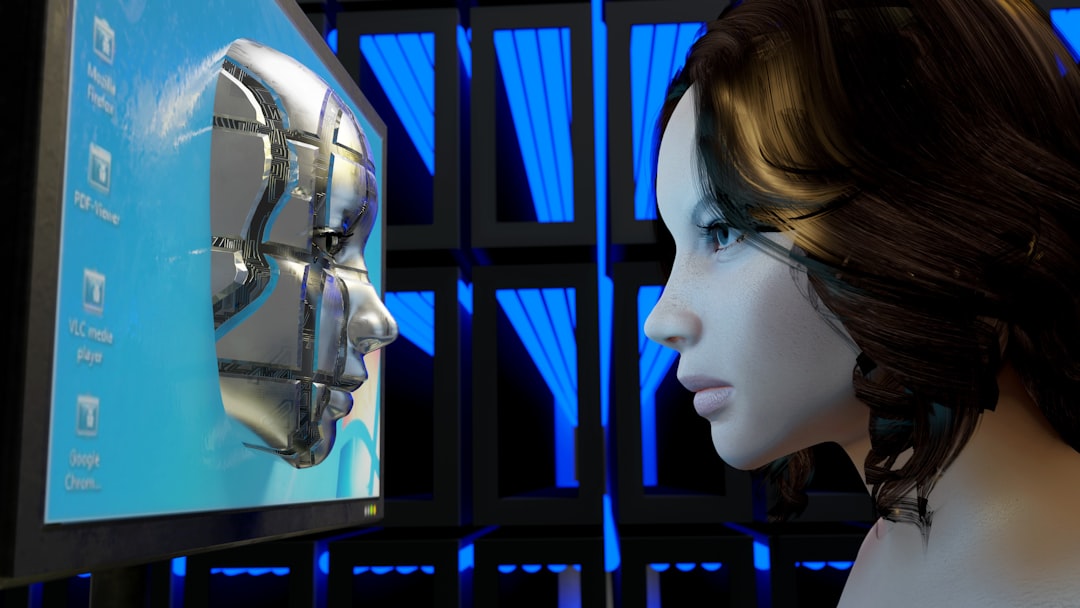
I'm not afraid of AI voice over. Twenty-plus years in this industry, clients ranging from Coca-Cola to Netflix, and the rise of synthetic voice technology has done exactly nothing to my confidence. If anything, it's reinforced it. The voices I hear coming out of ElevenLabs and its competitors are impressive as tech demos. But they're not competition for professional work, and I don't think they ever will be.
The Panic Is Overblown
Every few months someone sends me an article about how AI will replace voice over artists within five years. I've been receiving these articles since 2019. The timeline keeps resetting.
Here's what actually happens: a brand tries AI voice for a campaign, saves some money upfront, and then quietly returns to human voice over when the results underperform. According to a 2023 Veritone study, 78% of consumers say they trust human voices more than synthetic ones in advertising contexts. That number hasn't moved much despite the technology improving. The problem isn't the quality of the synthesis—it's something deeper.
And the brands that do stick with AI? They're the ones who were never going to pay professional rates anyway. The low end of the market was already lost to Fiverr amateurs and overseas voice farms before AI entered the conversation. AI will kill the bottom of the market—the $50 explainer videos, the internal training modules nobody actually watches. That segment was never mine to lose.
What AI Cannot Fake
The human voice has a vibrational dimension that synthetic audio cannot reproduce. I know that sounds mystical, and I don't mean it that way. Research from the HeartMath Institute has documented how live human voice creates physiological responses in listeners—lowered heart rate, reduced cortisol—that recorded synthetic voice does not trigger. Your body knows the difference even when your conscious mind can't articulate why.
Have you ever listened to an automated phone system and felt vaguely irritated without being able to explain the reason? That's your nervous system rejecting something that sounds almost human but isn't.
When Ford needs a Spanish voice over for a truck commercial targeting Latino markets, they're not trying to communicate information. They're trying to create trust. Connection. The feeling that this brand understands me. A synthetic voice cannot manufacture that feeling because it doesn't come from the sound waves—it comes from the resonance of one human being speaking to another. (This is also why AI voices work perfectly fine for GPS directions and fail spectacularly for anything emotional, but that's a different article.)
The Confidence That Comes from Experience
I started this career with a $100 microphone and no connections. Now I have a professional studio with Source Connect and clients on three continents. That trajectory didn't happen because I was lucky or because the market was easier back then. It happened because I learned to deliver what clients actually need: interpretation that serves the brief, delivered fast, with the ability to adjust in real time.
AI can't take direction.
When a creative director says "give me more warmth but less smile," I know exactly what that means and can deliver it in the next take. When someone says the read feels "too announcer-y," I can modulate without losing the professional quality they still want. The direction "don't sound like a voice over" is something clients have been saying for a decade, and what they actually mean is complex. An AI system processes text. A professional processes meaning.
Why Neutral Spanish Makes This Even Clearer
In my specific niche—neutral Spanish for pan-Latino advertising—the gap between human and synthetic is even wider. The U.S. Census Bureau reports over 62 million Hispanic Americans, representing nearly 20% of the population. These audiences come from Mexico, Puerto Rico, Cuba, Colombia, Argentina, and a dozen other countries with distinct accents and regional rivalries. A Colombian hearing a Mexican accent feels it immediately. An Argentine hearing Caribbean Spanish disconnects before the message lands.
Neutral Spanish—the constructed accent that belongs to no country and therefore works everywhere—requires a native speaker who has trained specifically to suppress regional markers while maintaining natural flow. It's a skill that takes years to develop. AI systems trained on regional data produce regional output. The "neutral" setting on most AI voice platforms sounds like a gringo who learned Spanish in community college. It's technically correct and completely unconvincing.
The Math Doesn't Favor Replacement
Let's talk economics for a moment. A 30-second commercial spot with professional Spanish voice over might cost a brand $1,500-3,000. That same brand is spending $500,000 or more on media placement. The voice over is less than 1% of the campaign budget but represents 100% of the audio brand impression.
Saving $1,000 by using synthetic voice makes no sense when the cost of audience disconnection—even subtle disconnection—impacts the effectiveness of a half-million-dollar media buy. The brands that understand this aren't experimenting with AI for their flagship campaigns. They're calling professionals directly.
I've Seen Disruption Before
The voice over industry has been "disrupted" multiple times in my career. Home studios were supposed to kill professional recording facilities. Online casting platforms were supposed to make agents obsolete. Fiverr was supposed to commoditize the entire profession into a race to the bottom.
Each of these changes killed something. Home studios did reduce demand for expensive studio bookings. Casting platforms did create a chaotic marketplace. Fiverr did capture the clients who only cared about price.
But the professional tier remained. Actually, it strengthened. The clients who understand what voice over can accomplish for their brand became more discerning, not less. They learned to avoid the chaos of mass casting and the inconsistency of cheap alternatives. They built relationships with professionals they could rely on.
AI is following the same pattern. It's capturing the segment that was already captured by low-cost alternatives, while the professional segment continues to value what only professionals can deliver.
The Real Threat Is Mediocrity
If I'm being honest, the thing that has always threatened voice over careers isn't technology—it's mediocrity. Voice over artists who coast on one vocal style, who don't take direction well, who deliver files late, who haven't invested in decent equipment or acoustic treatment. Those careers were fragile before AI existed.
The professionals who thrive are the ones who treat this as a service profession. The client has a brief. My job is to interpret that brief, offer informed suggestions when appropriate, and ultimately deliver what serves their campaign. That requires skill, experience, and the ability to collaborate in real time. None of which AI replicates.
So Why Am I Confident?
Because I know what I bring to a session. Speed. Flexibility. The ability to deliver three distinct interpretations of the same script in fifteen minutes. Native-level Spanish with genuine neutral delivery. English fluency for bilingual projects. A studio setup that lets me connect with clients anywhere in the world, any time they need me.
But mostly because I've heard the AI alternatives. They're impressive in demos and disappointing in deployment. Every brand that has tried them for serious advertising work has discovered the same thing: the technology sounds good until you need it to sell something. Then it sounds like what it is—a machine reading words.
The human voice isn't just sound. It's trust made audible.
Need a Spanish voice over for your next project? Get in touch and I'll get back to you within the hour.