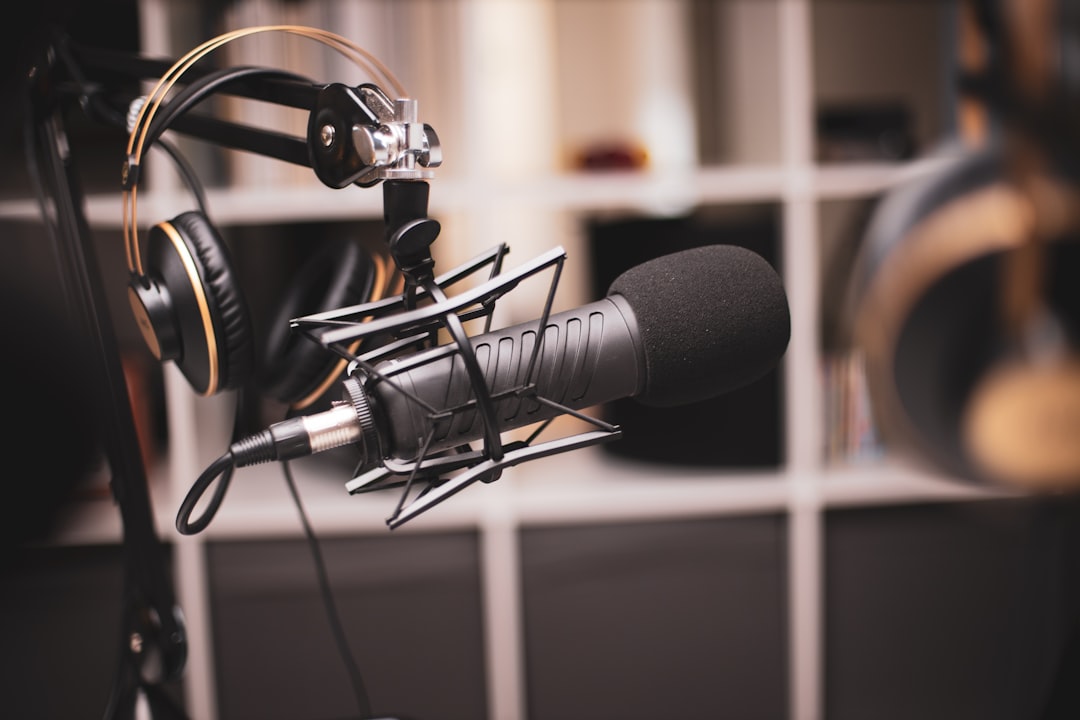
You can start voice over with a $100 microphone. I did. The industry tells you otherwise because the industry sells equipment, courses, and studio time. But here's what actually happened: my first paid jobs came from a setup that cost less than dinner for two at a mediocre restaurant in Manhattan. The microphone didn't book the work. I did.
Gear Mythology Is Expensive
There's a pervasive belief that professional voice over requires a Neumann U87, a treated booth, and a Focusrite interface with more knobs than you'll ever touch. According to a 2023 survey by Voice Over Resource Guide, the average beginner spends over $2,500 on equipment before booking their first job. That's backwards. You're investing in a business that doesn't exist yet, hoping the gear will summon clients from the void.
It won't.
What clients hear first is your interpretation. Your timing. Your ability to take direction without melting down. A $100 microphone captures all of that just fine. The Audio-Technica AT2020, which has been under $100 for years and remains one of the best-selling condenser mics in the world, has recorded national campaigns. So has the Rode NT1 when it was on sale. The difference between a $100 mic and a $1,000 mic is real, but it's not the difference between getting work and not getting work.
The Gear-First Trap
I've talked to dozens of people who wanted to break into Spanish voice over. Most of them asked the same question: what microphone should I buy? Almost none of them asked: how do I interpret a script?
That's the problem.
The voice over industry has no barrier to entry, which means anyone with a microphone and an internet connection can call themselves a voice over artist. The result is a flood of people with expensive setups and no skill. They sound great in their demos (which someone else produced) and terrible when they actually have to perform. Have you ever listened to a demo that sounded polished, hired the talent, and then wondered who showed up? That's the catfish effect. Your demo must sound like you on your worst day, recorded on your actual equipment, with your actual ability. Otherwise you're setting up a disappointment that costs the client time and costs you your reputation.
A professional studio with Source Connect doesn't make you a professional. Twenty years of work for Coca-Cola, Nike, Google, Ford, Netflix, and Amazon didn't come from my equipment. They came from knowing how to read a script, take direction, and deliver exactly what the client needed in one or two takes.
Work Buys Gear
Here's the actual sequence: you start with what you can afford. You book work. You use that money to upgrade. You book more work. You upgrade again. Eventually you end up with a professional studio because the work demanded it, not because you hoped it would.
My first booth was a closet. Literally. Clothes on hangers, a blanket over the door, a USB microphone on a desk lamp arm I bent into a boom stand. It looked ridiculous. It worked.
The upgrade came when a client needed Source Connect for a live-directed session. That specific requirement justified the investment. Before that requirement existed, spending $500 on connectivity software would have been money thrown into a void. After that requirement existed, it was a business expense that immediately paid for itself.
And here's something nobody tells you: most voice over work doesn't require live direction. Most clients send a script, you record it, you deliver it. For that, a $100 microphone in a quiet room is more than sufficient. According to the Global Voice Over Market Report from IBISWorld, the majority of voice over projects in 2024 were delivered remotely without live sessions. The industry has changed. The requirement for massive studio infrastructure has decreased, not increased.
The Interpretation Gap
The gap between amateur and professional voice over has nothing to do with gear and everything to do with what makes a voice over actually good. Can you take the direction "don't sound like a voice over" without asking what that means? Can you adjust your pacing by 10% without being told? Can you deliver the same energy on take one and take forty-seven if the client needs it?
Those skills don't cost money to develop. They cost time. They cost attention. They cost the willingness to listen to yourself critically and admit when you're not there yet.
I've heard voice over artists on $3,000 microphones who can't modulate their breath. I've heard people on $80 USB mics who can sell anything because they understand what the client actually wants. The first group keeps buying equipment hoping it will fix them. The second group keeps working.
What $100 Actually Gets You
A hundred dollars in 2024 buys you a condenser microphone that would have cost four times that twenty years ago. The technology has democratized. You can get a cardioid pattern, decent frequency response, and low self-noise for the price of two movie tickets and popcorn.
What it doesn't get you is acoustic treatment. But here's the thing about acoustic treatment: a moving blanket costs $15 at Harbor Freight. A closet full of clothes is free. The expensive foam panels and bass traps matter in a professional studio where you're recording orchestras. For voice over, you need a quiet space with minimal reflections. That's it. (I once recorded a rush job in a rental car parked in an underground garage because the hotel room had HVAC noise that wouldn't quit. The client never knew. The client didn't care. The read was clean.)
When to Upgrade
Upgrade when you have a specific, paid reason to upgrade. A client needs a certain file format your current interface can't deliver? Upgrade. A client needs live direction via Source Connect and your computer can't handle the latency? Upgrade. A client comments on room noise that's affecting the usability of the audio? Upgrade.
But upgrade because of actual, existing work. If you upgrade hoping to attract work, you're gambling. And in my experience, the people who gamble on gear instead of skills lose more often than they win.
The Spanish voice over market is growing. According to Nielsen, US Hispanic purchasing power exceeded $1.9 trillion in 2023, and brands are finally paying attention. That growth means more opportunities for people who can actually deliver. Your $100 microphone won't disqualify you from those opportunities. Your inability to perform neutral Spanish that works for 60 million Spanish speakers in the US will.
The Real Investment
The real investment in voice over is time. Time spent practicing cold reads. Time spent studying how professionals handle different genres. Time spent learning why scripts translated from English always need editing because Spanish runs 30% longer. Time spent understanding that the client is the client, and your job is to serve the brief, not to express yourself.
Equipment is a one-time expense you can spread out over years. Skill development is ongoing. The person who spends $100 on a microphone and $2,400 on coaching, practice time, and honest self-assessment will out-earn the person who spends $2,500 on equipment and expects it to generate bookings.
I started with a $100 microphone because that's what I could afford. I stayed in the industry for twenty years because I learned how to perform. The microphone I use now costs considerably more, but it didn't make my career. The work made my career, and the work bought everything else.
Need a Spanish voice over for your next project? Get in touch and I'll get back to you within the hour.