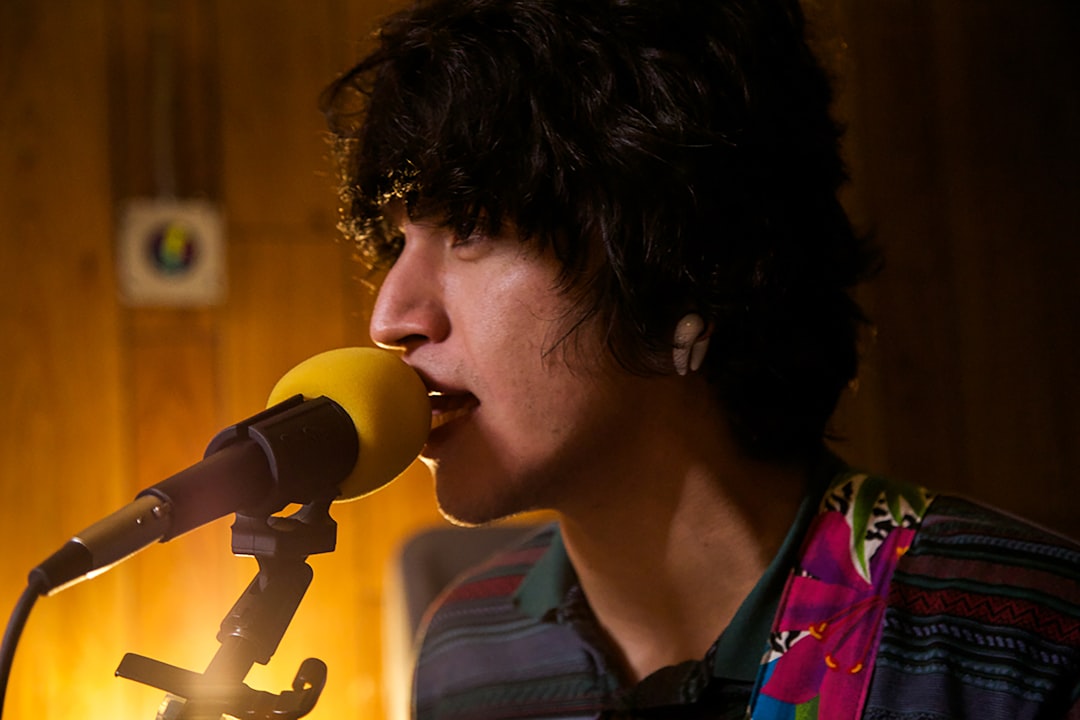
Source Connect is the industry standard for remote Spanish voice over recording because it solves the only problem that actually matters: getting studio-quality audio from my booth to your session in real time, anywhere in the world. That's it. No compression artifacts, no latency issues, no "can you hear me now" moments during your Ford campaign.
If you've never directed a remote voice over session, you might think Zoom or a phone call would work. They don't.
The technical reality behind professional studio connection
Source Connect transmits uncompressed broadcast-quality audio over the internet. According to the Audio Engineering Society, uncompressed audio maintains full frequency response between 20Hz and 20kHz — the complete range of human hearing. Zoom, by contrast, compresses audio to roughly 128kbps, which cuts frequencies and introduces artifacts. You'd hear it immediately on playback, even if you couldn't name the problem.
The difference matters most during direction. When you're sitting in a session and you ask me to give you three reads — warmer, faster, more conversational — you need to hear exactly what you're getting. Not a degraded approximation that sounds different once the final file arrives. Source Connect gives you the same audio quality in the live session that you'll receive in the delivered files.
And here's what clients often miss: the sync matters as much as the quality. Source Connect maintains time-code synchronization, which means if you're recording against picture or laying voice over against music, everything stays locked. Try that with a standard video call. (I've seen sessions derailed by a half-second delay that made direction impossible — the talent hears the note after they've already moved on.)
Why your agency or brand should care
Remote Spanish voice over recording saves money. That's the obvious part. You don't fly me to New York, you don't book studio time at $400/hour, you don't lose a day to travel. According to the Society of Motion Picture and Television Engineers, remote production adoption increased 340% between 2020 and 2023, and most of that growth has stayed permanent because the economics make sense.
But the less obvious benefit is flexibility. I'm available at 2am your time if you're on deadline in London. I've done emergency sessions for Netflix on holidays because the studio is ten steps from my bedroom. That kind of turnaround becomes possible when the only requirement is both of us having internet access.
Have you ever been on a call with someone and felt like you were talking through a wall? That's what cheap audio does to communication. It creates distance. Source Connect removes that wall, which means the creative process actually works — you can direct the session as if we were in the same room, hearing the same thing.
How a Source Connect session actually works
You book the session. You get a link or a code. You connect through your end — usually your engineer handles this, though some clients connect directly from their laptops using Source Connect Now, the browser-based version. I connect from my studio. We do a quick audio check. Then we record.
The session runs exactly like an in-person studio booking. You hear me in real time, full quality. You give direction between takes. I adjust. We get the read you need. The files are either recorded on your end simultaneously or I deliver them immediately after — often both.
Most professional studios worldwide run Source Connect. According to Source Elements (the company that makes it), over 15,000 studios across 120 countries have the software installed. That means if you're working with any professional voice over artist who takes their work seriously, they have it. If they don't, that tells you something.
What Source Connect doesn't fix
Technology solves technical problems. It doesn't solve talent problems.
If you hire someone who speaks Spanish like Jennifer Lopez — which is to say, barely — Source Connect will deliver that mediocre performance in pristine audio quality. The clarity just makes the accent problems more obvious. A native Spanish voice over artist matters more than any equipment.
And if the script needs work, you'll discover that live on the session, which wastes everyone's time. Spanish scripts translated from English almost always need editing because Spanish runs about 30% longer. I can tell you during the session that the timing doesn't work, but you'll still need to cut copy. Better to handle that before we connect.
Source Connect also doesn't replace the need for good direction. The tool transmits audio — it doesn't direct the session for you. If you're not sure how to brief a Spanish voice over session, that's a separate skill from the technical setup.
The real value of professional studio connection
I started with a $100 microphone. Work buys gear — gear doesn't buy work. But once you're at a professional level, the studio matters because it removes variables. My room is acoustically treated. My signal chain is clean. My Source Connect license is current and tested. When you book a session, you're not troubleshooting technical problems — you're recording.
That reliability has value. A 2024 survey by Backstage found that 67% of producers cited "technical issues during remote sessions" as their biggest frustration with voice over casting. Most of those issues come from home setups without proper treatment or artists using consumer-grade solutions instead of professional studio connection.
I've done sessions for Coca-Cola, Google, Amazon — brands that don't have time for "let me restart my computer." The session works. Every time.
When remote recording makes more sense than in-person
Almost always, honestly.
The only scenario where in-person beats remote is when you're recording a large cast together and need the actors to play off each other in real time. Or when the budget is unlimited and you want the social experience of gathering everyone in one room. For single-voice projects — commercials, corporate narration, e-learning, IVR — remote is faster, cheaper, and produces identical results.
The pandemic proved this at scale. Productions that swore they needed everyone in the same room discovered they didn't. According to a 2023 report from the World Federation of Advertisers, 78% of brands now prefer remote recording for voice over work, citing cost efficiency and scheduling flexibility as the primary drivers.
And for Spanish voice over specifically, remote recording solves a geographic problem. The best neutral Spanish voice for your campaign might be in Buenos Aires, Mexico City, or Miami. You don't need to pick based on who lives near your studio. You pick the right voice. Then you connect.
Need a Spanish voice over for your next project? Get in touch and I'll get back to you within the hour.