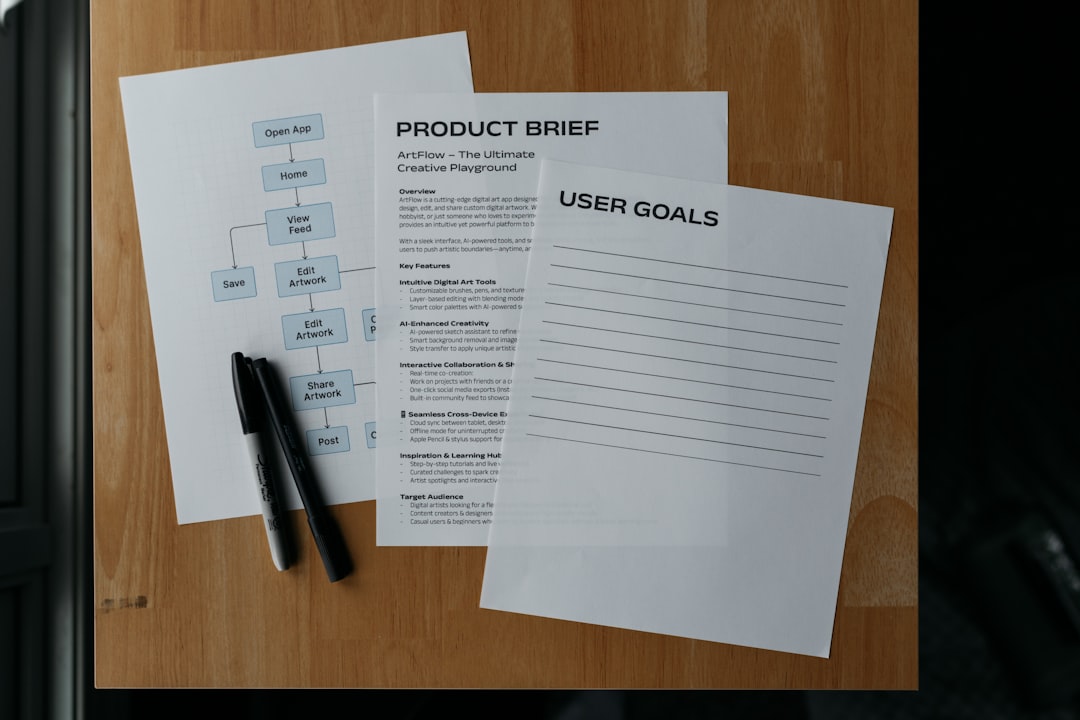
A voice over brief template every producer must have is the difference between a 20-minute session and a 3-hour disaster. I've been on both sides. After 20+ years recording for brands like Nike, Google, and Ford, I can tell you that the quality of the brief predicts the quality of the session with almost perfect accuracy.
The template I'm about to share isn't theoretical. It comes from thousands of sessions — the ones that went smoothly and the ones where we had to restart because nobody knew what we were actually trying to accomplish.
The seven fields that matter
Most briefs fail because they include everything except what the voice over artist actually needs. Here's what belongs in every brief, no exceptions:
1. Final script with timing. Not the deck version. Not the "we're still tweaking it" version. The locked script. If it's translated from English, it needs to be edited already — Spanish runs about 30% longer than English, so the script either gets cut or the delivery sounds rushed.
2. Usage and distribution. TV broadcast in the US and Latin America? Digital only? Internal training? This affects everything from rights to tone. A Nike spot that runs on Telemundo during the World Cup requires a different approach than an internal compliance video for warehouse employees.
3. Target audience. "Latino consumers" means nothing. Miami Cubans? Second-generation Mexican Americans in Texas? Pan-Latino national campaign? According to Pew Research Center's 2023 data, the US Hispanic population has grown to 65 million — but that population spans three generations, multiple income brackets, and wildly different cultural contexts.
4. Reference audio or video. Send something that sounds like what you want. A previous campaign, a competitor's ad, even a rough cut with temp voice. I can decode "warm but professional" seventeen different ways. A reference file narrows it to one.
5. Music bed. If you have the track that will go under the voice, include it. Recording against the actual music helps the artist find the right energy and pacing. This isn't a nice-to-have — it changes the interpretation substantially.
6. Accent specification. And here's where most briefs go wrong. "Spanish" isn't an accent. Neutral Spanish is what you want for anything pan-Latino. If you're requesting Colombian or Guatemalan because your creative director likes how their friend talks, that's not a brief — that's a feeling pretending to be strategy.
7. Delivery format and deadline. WAV or MP3? Stems or mixed? Does the file need to be named a specific way for your DAM system? When do you need it? These details save three emails.
What "make it sound natural" actually means
Have you ever listened to an ad and immediately thought it sounded like an ad — in a bad way? That's what clients are trying to avoid when they say "don't sound like a voice over." I've heard this direction roughly once per session for the past decade.
What they mean: don't sound like a 1950s announcer projecting to the back row of a theater. But they still want someone who speaks well, who hits the timing marks, who makes the product sound desirable. They want a professional who doesn't sound like they're performing.
The problem is that "natural" is the vaguest possible direction. Natural for a pharmaceutical disclaimer? Natural for a food delivery app targeting college students? Natural for a corporate earnings call explainer?
Your brief should specify the context where "natural" lives. A sentence like "conversational tone, like explaining something to a friend who happens to be in the market for a new car" gives me something to work with.
The voice over brief template for Spanish neutral campaigns
When you're targeting pan-Latino audiences, the brief template needs additional fields. Here's what a complete Spanish producer brief template voice over should include beyond the basics:
Regional sensitivity notes. Are there words in the script that sound vulgar or strange in certain countries? A good translator catches most of these, but briefs often arrive post-translation with problems baked in. (I once recorded a script that used a word for "to grab" that's extremely vulgar in Mexico — the translator was from Spain and had no idea.)
Code-switching expectations. Some campaigns use strategic English words within Spanish scripts. Others want pure Spanish. Specify this. The 2022 Nielsen Diverse Intelligence Series found that 71% of Hispanic consumers feel positively about bilingual advertising — but the mix matters.
Neutral Spanish confirmation. Don't assume the artist knows what neutral Spanish means. Explicitly state: "We need accent-neutral Spanish, no regional markers, suitable for US, Mexico, and Latin America." This prevents the artist from defaulting to their native regional accent.
The timing trap
Spanish scripts translated word-for-word from English create a specific problem: they don't fit the time. This isn't opinion. It's math.
If your English script runs exactly :30 and you translate it directly to Spanish, the Spanish version will run approximately :39. You now have three bad options: the artist reads faster than natural (sounds rushed and stressed), you cut the Spanish script (requires going back to the client), or you extend the spot (rarely possible).
Your brief should include the target runtime AND confirmation that the Spanish script has been adapted — not just translated — to fit that runtime. If you're sending me a :30 script in Spanish that's clearly 40 seconds of content, we both know the session is going to involve awkward conversations.
Reference files change everything
I cannot overstate this: sending a reference track eliminates 80% of creative miscommunication. But the reference needs to be the right kind.
Good reference: "Here's a recent Honda spot we liked — the pacing and warmth are what we're going for, though we want slightly more energy in the final tagline."
Bad reference: "Something like this but different" with no specificity about what you liked or what should change.
The reference track fundamentally shifts the conversation from abstract descriptors to concrete examples. Instead of debating what "confident but approachable" means, we're both hearing the same thing.
Why your accent requests might be wrong
I see this constantly on casting briefs: "Colombian accent" or "Argentinian accent" with no strategic rationale. When I ask why, the answer is usually one of two things: someone on the team has a friend from that country and likes how they talk, or they want "not Mexican" and don't know neutral Spanish exists.
Latin American rivalries are real. A strong regional accent can alienate as many viewers as it attracts. According to the US Census Bureau, Mexican-origin Hispanics make up 60% of the US Latino population — but the remaining 40% spans dozens of national origins. A Mexican accent for a national campaign risks the other 40%. An Argentinian accent (distinctive and beloved by some, mocked by others) risks even more.
Neutral Spanish solves this. It belongs to no country, so it excludes no country. Your brief template should default to neutral Spanish unless there's a documented strategic reason for a regional accent.
The first take problem
Here's something clients rarely believe until they experience it: the first take is usually the best. The voice over artist reads the script cold, brings their professional interpretation, and delivers something natural. Then the client asks for 50 variations. At the end, they pick take number one because it was the least self-conscious.
Your brief should specify how many takes you expect to review, and whether you want live direction via Source Connect or self-directed recording with options. If you want three variations with different energy levels, say that. If you want one interpretation done well with pickups for any flubs, say that instead.
The artist who knows what you need can deliver it efficiently. The artist who's guessing will give you 50 takes while you both waste time.
What your template should look like
A complete brief fits on one page. Here's the structure:
Project name and brand. Script — final, locked, timed. Target runtime — with confirmation Spanish has been adapted to fit. Usage — broadcast territories, platforms, duration of campaign. Audience — demographic and psychographic specifics. Tone — two or three adjectives plus context for what those mean. Accent — neutral Spanish unless specified otherwise with reasoning. Reference files — audio or video examples attached. Music bed — attached if available. Delivery specs — format, naming convention, deadline. Contact — who approves takes and how to reach them during the session.
That's it. Everything else is noise.
The hidden cost of incomplete briefs
A bad brief doesn't just waste the artist's time. It wastes yours. According to a 2023 survey by the Content Marketing Institute, 65% of marketers cite workflow inefficiencies as their biggest operational challenge. In voice over, those inefficiencies almost always trace back to ambiguous briefs.
You'll pay for pickup sessions when the first delivery doesn't match your unstated expectations. You'll pay in revision cycles when stakeholders hear the audio and realize nobody specified what they actually wanted. And you'll pay in opportunity cost when a campaign launches late because the voice over had to be re-recorded twice.
The template isn't bureaucracy. It's insurance.
Need a Spanish voice over for your next project? Get in touch and I'll get back to you within the hour.