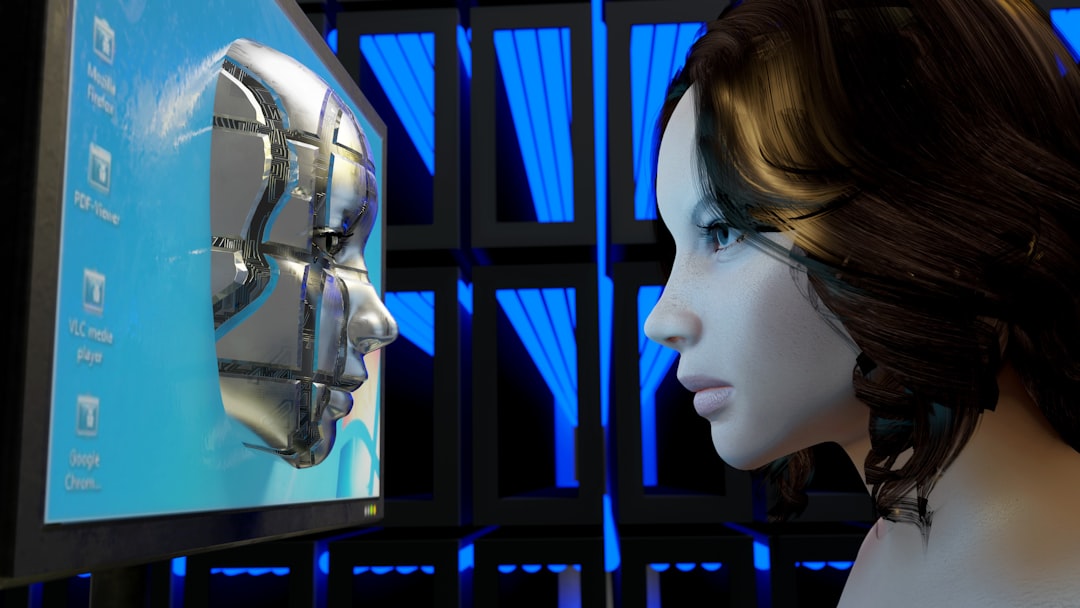
Your audience knows when a voice is synthetic. They just don't know that they know. This is the core problem with AI voices in advertising — the rejection happens below conscious awareness, which means focus groups won't catch it, surveys won't reveal it, and your analytics will show you everything except the real reason people didn't engage.
I've spent over 20 years recording voice overs for brands like Ford, Netflix, and Google. And in that time, I've watched the industry go through multiple waves of "this will replace human voice" predictions. None of them panned out, for reasons that have nothing to do with audio quality and everything to do with how the human brain processes voice.
The 200-millisecond verdict
The human brain makes decisions about voices faster than conscious thought can register. Research from the University of Glasgow found that listeners form impressions of a speaker's personality within 200 milliseconds of hearing their voice — before a single word is complete. That's the same timeframe for a startle reflex. Your audience isn't deciding whether they trust a voice. Their limbic system already decided for them.
This matters because AI voices, no matter how technically impressive, fail tests they were never designed to pass. A synthetic voice might score well on clarity, pronunciation, even emotional range in controlled settings. But something in the micro-variations of human speech — the tiny hesitations, the subtle breath patterns, the way stress falls slightly differently each time — signals "human" to the brain in ways that synthetic voices cannot replicate.
Why the body knows before the mind
A 2019 study published in Computers in Human Behavior found that participants showed elevated cortisol levels when interacting with synthetic voices compared to human ones, even when they couldn't consciously identify which was which. Stress hormones don't lie. The body mounts a subtle defensive response to what it perceives as unnatural, and that response bleeds into how people feel about your brand, your message, your product.
Have you ever listened to an automated phone system and felt vaguely irritated before the menu options even started?
That's the phenomenon at scale. And in advertising, where you have seconds to establish trust and connection, starting with an elevated cortisol response is like beginning a first date by stepping on someone's foot. You might recover. But you're already behind.
What the uncanny valley really means for audio
Everyone knows the uncanny valley from robotics — that creepy zone where something looks almost human but not quite. What's less discussed is that the same principle applies to voice. The closer AI gets to sounding human, the more unsettling the small failures become. A clearly robotic voice is processed differently by the brain; it gets categorized as "machine" and expectations adjust accordingly. But a voice that's 95% human triggers comparison against the real thing, and that remaining 5% becomes magnified.
The uncanny valley of voice creates a specific problem for advertisers: the better AI voices get, the more they activate this rejection response. A primitive text-to-speech system from 2005 didn't trigger uncanny valley reactions because nobody mistook it for human. ElevenLabs in 2025 sounds almost human, which is precisely why the failures register so strongly.
(I've played AI-generated Spanish voice overs for native speaker clients who couldn't articulate what was wrong, only that something felt off — and these were people who couldn't tell you the first thing about phonetics or audio processing.)
The trust gap is measurable
According to a 2023 Pew Research Center study, 52% of Americans report feeling "more concerned than excited" about AI in daily life. That baseline skepticism doesn't disappear when AI voices appear in advertising — it amplifies. Listeners who suspect a voice might be synthetic become actively resistant to the message.
But here's the twist: even listeners who don't consciously suspect anything show reduced trust responses. A study from Stanford's Virtual Human Interaction Lab found that people disclosed less personal information to AI-driven voices than to human voices, even when they were told both were AI. The brain makes its own calculations.
This is why AI voice over fails where it matters most — in the moments where trust determines action. Notifications, reminders, utilitarian applications? Fine. A voice asking someone to open their wallet, change their opinion, take a risk? The subconscious rejection kicks in.
The vibrational element nobody talks about
Human voice carries information that no spectrograph fully captures. The resonance of chest voice, the harmonics created by actual vocal cords vibrating in an actual body, the micro-variations that come from being a living organism rather than a predictive model — all of this creates what I call the vibrational dimension of voice. And that dimension is what separates communication from connection.
A Nielsen study on audio advertising effectiveness found that ads with human voice overs showed 19% higher brand recall than those with synthetic elements. The difference wasn't in the words or even the delivery style. The difference was in something the conscious mind couldn't name but the memory systems could encode.
When "good enough" fails
The argument I hear most often from brands considering AI voice is that it's "good enough" for their purposes. And for some purposes, maybe it is. Internal training videos that no one watches carefully. Automated announcements that people tune out anyway. The bottom of the market where expectations are already low.
But professional advertising operates on margins. A 3% difference in engagement, a 5% shift in brand perception, a subtle erosion of trust that accumulates over repeated exposures — these matter at scale. When Ford or Nike or Amazon chooses human voice over AI, they're not being sentimental. They're being strategic about a decision that affects millions of impressions.
The rejection you never see in the data
The most insidious aspect of subconscious rejection is that it doesn't show up where you're looking. Click-through rates might hold steady. Completion rates might look normal. The campaign might even hit its surface-level metrics. But somewhere in the funnel — in the consideration phase, in the recall tests weeks later, in the brand equity measures that take quarters to shift — the damage accumulates.
I've had clients come back to me after experimenting with AI voices for "lower priority" content, puzzled by a general softening in brand metrics they couldn't attribute to any specific campaign. The connection is hard to prove and impossible to ignore once you see the pattern.
What happens at the speed of instinct
Your audience doesn't run a checklist when they hear a voice. They don't think "natural breath patterns: check, appropriate emotional variation: check, authentic stress patterns: check." They simply feel trust or they feel distance. They engage or they tune out. They remember or they forget.
And all of this happens at the speed of instinct, in the same brain systems that evolved to detect predators and identify tribal members. The synthetic voice triggers ancient alarm bells that have nothing to do with whether ElevenLabs improved its Spanish pronunciation this quarter.
The human voice reduces stress in ways that synthetic voice cannot replicate. Until AI can generate cortisol-reducing audio signals, the subconscious rejection will continue — invisible in focus groups, untraceable in surveys, but real in every metric that actually matters.
Need a Spanish voice over for your next project? Get in touch and I'll get back to you within the hour.