AI can pronounce Spanish words correctly. It can hit the right syllables, avoid obvious mispronunciations, and deliver a sequence of sounds that technically qualify as Spanish. What it cannot do — and this is where every synthetic voice fails — is ride the rhythm. Native Spanish has a cadence that exists between the words, in the spaces, in the accelerations and decelerations that no training dataset captures because they were never consciously taught. They were absorbed.
The Problem Lives in the Silences
Spanish rhythm operates on a syllable-timed system, unlike English which is stress-timed. A 2019 study from the University of Barcelona's phonetics lab found that native Spanish speakers process syllable timing at intervals of approximately 200 milliseconds, with micro-variations that communicate meaning beyond the semantic content of words. AI models trained on recorded speech can approximate these intervals, but approximation produces something uncanny.
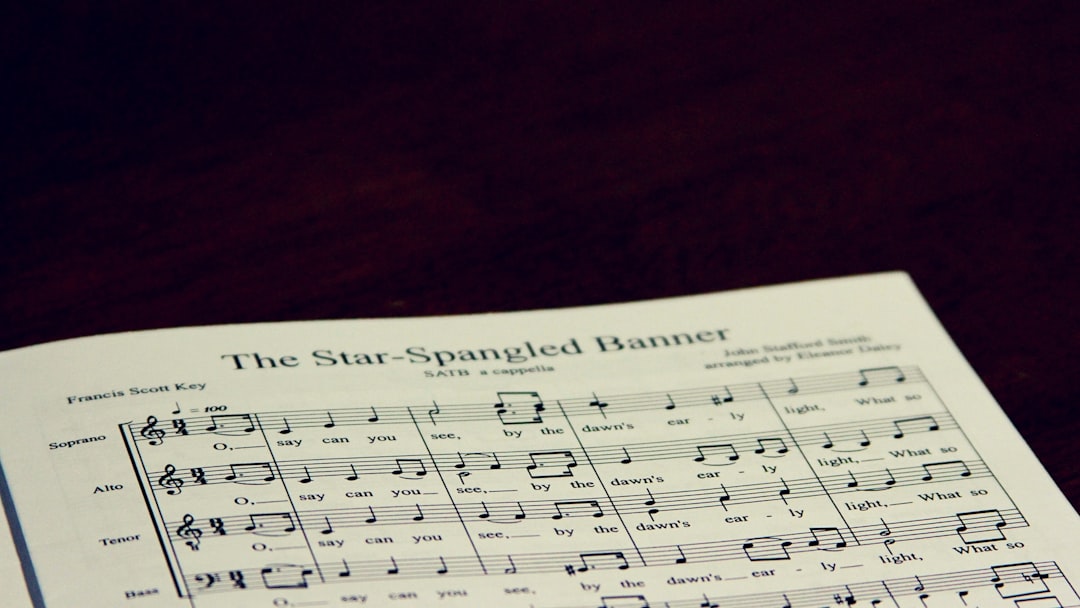
The issue is that Spanish cadence varies based on emotional intent, regional origin, and conversational context — simultaneously. A native speaker adjusts all three without thinking. An AI model picks one pattern and applies it uniformly. The result sounds like someone reading sheet music note by note instead of playing the phrase.
What Happens at 200 Milliseconds
Here's where it gets technical. Native speakers insert pauses that last fractions of a second. These pauses carry information.
A pause before an adjective signals emphasis. A pause after a verb can indicate doubt or certainty depending on its duration. According to research published in the Journal of Phonetics (2021), listeners can distinguish between sincere and sarcastic Spanish statements based solely on micro-timing variations — differences of 50-80 milliseconds that native speakers produce automatically and non-native speakers (including AI) systematically miss.
Have you ever watched someone try to tell a joke in a language they learned as an adult? The punchline lands wrong because the timing is off by a beat. That's what AI voice sounds like to every native Spanish speaker listening to your ad. The words are correct. The rhythm is a joke without the laugh.
Neutral Spanish Has Its Own Rhythm
I always recommend neutral Spanish for pan-Latino campaigns. And one thing people don't realize is that neutral Spanish has a specific rhythmic signature too. It removes regional markers from vocabulary and pronunciation, but it maintains a flow that sits comfortably across demographics.
AI can't produce neutral Spanish rhythm because it doesn't understand what it's neutralizing. It averages patterns from its training data, which means it produces something that sounds vaguely Mexican if trained on Mexican voice samples, or vaguely Argentine if trained on Argentine samples. The rhythm betrays the source material every time.
A native speaker who has trained in neutral delivery (which takes years, by the way — I've written about what that training involves) can produce a cadence that works for audiences from Miami to Buenos Aires. An AI produces a cadence that works for nobody in particular.
The Prosodic Contour Problem
Prosody is the melody of speech — the rises and falls, the way sentences shape themselves in the air. Spanish prosody differs dramatically from English prosody, and within Spanish, it differs by region, by generation, by social context.
A statement in Spanish typically falls at the end. A question rises, but the point where it rises and how sharply it rises communicates different things. "¿Vas a venir?" can be an invitation, a challenge, or a genuine inquiry depending entirely on the prosodic contour. According to the Hispanic Linguistics Symposium (2022), listeners identify speaker intent from prosody alone with 73% accuracy — and that accuracy drops to 41% when listening to synthesized speech.
AI flattens these contours. It produces speech that rises and falls, but the rises and falls follow patterns that don't match the semantic content. The technology is mimicking form without understanding function.
Why Your Body Knows Before Your Brain
Research from the University of Glasgow's Institute of Neuroscience and Psychology (2020) found that humans process vocal authenticity in the amygdala — the part of the brain that handles threat detection — before conscious auditory processing kicks in. We evaluate whether a voice is trustworthy in approximately 300 milliseconds, and rhythm irregularities trigger suspicion responses.
This is why people reject AI voices without knowing why. They'll say "something sounds off" or "I don't like the tone" when what they're actually detecting is cadence that doesn't match their internalized model of authentic human speech.
And here's the commercial reality: Nielsen's 2023 Trust in Advertising report found that audio ads with voices rated as "authentic" by focus groups showed 23% higher brand recall than those rated as "professional but artificial." The study didn't specifically test AI versus human voices, but the implication is clear. Rhythm that registers as mechanical costs you audience attention.
The Training Data Trap
AI companies train their Spanish models on recorded speech — podcasts, audiobooks, voice over archives. The problem is that professional recorded speech already represents a narrow slice of how Spanish sounds. It's speech that has been cleaned, edited, performed. It lacks the spontaneous rhythmic variation that characterizes natural communication.
(I once sat through a demo of a "revolutionary" Spanish AI voice that was trained on thousands of hours of dubbed content. It sounded exactly like dubbed content — which is to say, slightly off in ways that native speakers immediately clock but can't articulate.)
When you layer AI synthesis on top of already-artificial training data, you get speech that's twice removed from authentic rhythm. The pauses are where pauses were in the recordings. The emphasis lands where emphasis landed in the source material. There's no adaptation to context because there's no understanding of context.
The Speed Problem
Spanish is approximately 30% longer than English when translated. Scripts written in English and converted to Spanish need to be cut or the delivery sounds rushed.
A human voice over artist reads the script, recognizes it's too long, and makes micro-adjustments — slightly faster here, slightly compressed there — while maintaining natural cadence. The rhythm adapts to serve the message.
AI reads at a consistent pace. When the script is too long, it either rushes everything uniformly (which sounds mechanical) or maintains normal pace and runs over time (which is useless for broadcast). It cannot make the judgment calls that preserve rhythm while hitting time marks.
What This Means for Your Campaign
The cadence problem compounds every other AI limitation. It combines with the accent problem, the emotional flatness, the lack of vibrational authenticity. Each element alone might be tolerable. Together, they produce speech that native Spanish speakers reject at a level deeper than conscious evaluation.
But here's what I find interesting: brands often test AI voices on non-Spanish speakers before deploying them. The marketing team in New York listens, approves, and deploys to a Latino audience that immediately knows something is wrong. The people making the decision can't hear what the audience hears because they don't have the internalized rhythmic model that native speakers carry from childhood.
This is why I keep saying — and I've been saying it for two decades — you need native speakers involved in every stage of Spanish voice over production. From script adaptation to voice selection to final approval. The cadence of a native cannot be evaluated by someone who doesn't carry it in their nervous system.
Need a Spanish voice over for your next project? Get in touch and I'll get back to you within the hour.