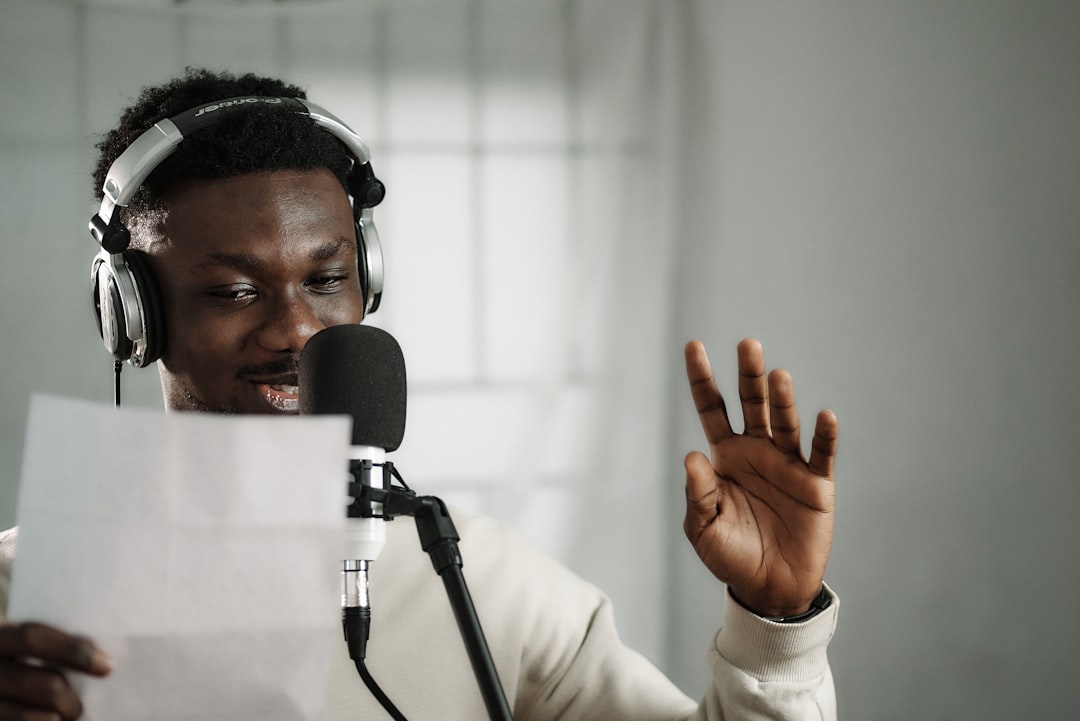
The best voice over work I've done in 20 years has been with clients I've worked with for a decade or more. That's the answer. If you want to know how to build a long-term relationship with your Spanish voice over artist, the short version is: stop treating every project like a new casting. The long version is everything that follows.
Why the second project is always better than the first
The first time you work with a voice over artist, there's an adjustment period. I'm learning what you actually want when you say "conversational" (which varies wildly from client to client). You're learning that I take direction well but might push back if a script needs trimming. We're both figuring out the rhythm — how fast you send feedback, how quickly I turn around revisions, whether you prefer Source Connect sessions or file delivery.
By the second project, all of that friction disappears. I already know your brand voice. You already trust my interpretation. The session that took two hours the first time takes forty-five minutes. And the third project? Even faster. A 2021 study from the Harvard Business Review found that established working relationships reduce project completion time by up to 25% across creative industries. In voice over, I'd say that number is conservative.
The casting trap
Here's what happens when brands run a new casting for every project: they spend hours reviewing auditions from people who don't understand the brief, then pick someone who sounds good in a produced demo but can't replicate it live, then spend the session educating that person on brand guidelines they've never seen. (I've been on the receiving end of this — hired to replace a voice that bombed in session because the client cast based on a heavily edited sample.)
And then the next project comes, and they do it all over again.
Meanwhile, brands that maintain ongoing relationships with a neutral Spanish voice professional get consistency. Their campaigns sound like they come from the same brand. Their internal teams don't have to re-explain everything every time. There's a reason Fortune 500 companies tend to lock in voice over artists for years — it saves time, money, and creative energy.
What makes an ongoing partnership actually work
The relationship survives if both sides hold up their end. From the artist's side: be available, be flexible, deliver clean audio on time, and don't complain when the client asks for adjustments. From the client's side: pay on time, give clear briefs, and trust the professional to do their job without micromanaging every syllable.
That second part trips up more people than you'd think.
Have you ever sat through a session where the client asks for 30 takes of the same line, each with a microscopic variation, only to use take number two? That's not direction — that's doubt. And doubt corrodes the relationship over time. The best long-term partnerships I have are with clients who give me the brief, let me interpret it, and then say "perfect" or "a little warmer" or "try one more with less energy." Clear. Efficient. Professional.
The value of neutral Spanish in long-term brand voice
If you're building a relationship with a Spanish voice over artist, there's a practical question you need to answer: which accent? My recommendation is always neutral Spanish. A neutral Spanish voice ongoing relationship makes sense because your campaigns can run anywhere in Latin America and the US Hispanic market without alienating anyone.
Regional accents lock you in. You hire a Colombian voice for one campaign, and now every subsequent campaign either has to match that accent or explain the inconsistency. With neutral Spanish, the voice becomes the brand voice — recognizable, consistent, and universally understood. According to the Pew Research Center, US Hispanics trace their origins to more than 20 countries. Neutral Spanish is how you speak to all of them without picking favorites.
How to start (and how to keep it going)
Starting is simple: find a professional whose demo sounds like what you need, run one project, evaluate. But keeping it going requires intention. Here's what I've seen work:
Book recurring sessions in advance rather than scrambling last-minute. Send scripts early so the artist can flag issues before you're in session. Give honest feedback — if something didn't work, say so. Don't ghost for six months and then expect the artist to drop everything for your emergency. Respect goes both directions.
And here's the part nobody talks about: sometimes you have to say no to other opportunities to maintain a long-term relationship. If I'm the voice of a car brand, I'm probably not going to voice their direct competitor. That exclusivity has value. Acknowledge it.
The compound effect of consistency
A brand that uses the same Spanish voice over artist for five years builds something that a brand running fresh castings every quarter never will: recognition. The audience starts to associate that voice with the brand, even if they don't consciously notice it. It's the audio equivalent of a visual identity — subtle but powerful.
Nielsen's research on audio branding shows that sonic consistency increases brand recall by up to 96%. Voice is part of that sonic identity. Every time you switch voices, you're essentially redesigning your audio logo. Do it once because you need to? Fine. Do it constantly because you can't commit? That's a brand problem, not a voice over problem.
When the relationship should end
Sometimes it should. If the artist's voice no longer matches the brand direction, if quality drops, if communication becomes difficult — those are valid reasons to move on. But "we found someone cheaper on Voices.com" is a terrible reason. You're not saving money; you're spending more time, getting worse results, and starting the learning curve over again.
The long-term relationship with your voice over artist isn't a loyalty test. It's a strategic decision that pays dividends in quality, efficiency, and brand coherence. Treat it that way and you'll understand why the same names keep showing up in the credits of the biggest campaigns, year after year.
Need a Spanish voice over for your next project? Get in touch and I'll get back to you within the hour.